
As the world continues to get smaller, and humans move their lives from one country to another, we are inevitably going to find ourselves having to work with students that are new to speaking English. This can be incredibly challenging, especially if the teacher does not have knowledge of the student’s native language. This has been the case with me this year. I speak Italian fluently. Many of the students that I worked with in my former school district are native Spanish speakers. I took some Spanish in college, so between my understanding of cognates and my fluency in Italian, I was able to muddle my way through communicating with my students and their families. Since moving to a new teaching environment a couple of years ago, the English Language Learners that I work with come from mostly Asian countries — particularly, China and Korea. I have absolutely no background in Asian languages! But, I have discovered ways to successfully work with my ELLs.
All of my English Development sessions begin with oral language. The whole reason humans developed language is to communicate with one another. I try to have a conversation with my students. Google Translate has been a life saver! I want my students to know that I genuinely want to get to know them as well as guide them in having a conversation in English. While teaching virtually, I’m also able to show translated slides to support the conversation.

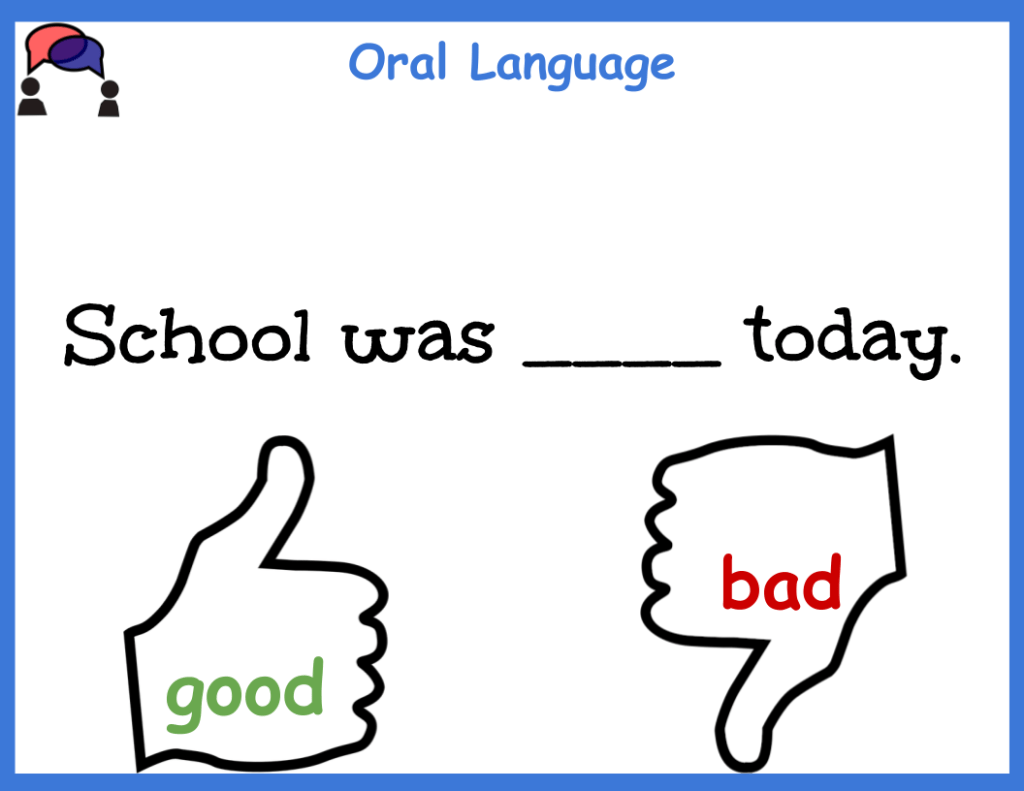
In addition to providing translated slides for oral language, I also provide translated slides for directions. When working in-person, I use Google Translate to voice my directions to my students.

Providing lots of visuals and translations, and showing my students that I genuinely want to know them as individuals has made a huge difference in their success in learning English. It helps them to see that our language differences will not be a barrier to our relationship. It also helps them in knowing that although we don’t understand each other much right now, I am willing to find ways for us to communicate effectively. That knowledge gives them the confidence to move forward with our Word Study and Reading Comprehension.
Learning a new language is never easy. As teachers, even if we’ve never tried learning a new language ourselves, it’s important for us to keep in mind how challenging learning a new language can be. Be patient with your ELLs, and model for them how they need to be patient with themselves. Being away from their home country and learning a new language can make anyone frustrated. Sometimes that frustration can be productive by motivating us to make changes and move forward. However, language development takes time. Being patient is the key to productive language learning.
What strategies are working for you as you work with students who are new to learning a language? Don’t forget to comment and share. At the end of the day, we are ALL language learners!
Until next time…Happy Teaching!


 PinaRose Education